The best sofa bed for everyday use combines a supportive sleeping surface, a strong frame, durable cushions, correct dimensions and reliable construction matched to the real duty. A sofa bed that works for occasional guests may not be suitable for daily sleeping, repeated conversion or high-frequency sitting. Hotels, serviced apartments, rental operators and furniture buyers should define those duties separately, then approve a complete sample rather than choosing from appearance, mattress thickness or a broad ‘commercial grade’ description.
This guide focuses on comfort, support, materials, durability and practical testing. It does not repeat the full sofa bed mechanism guide or the dedicated click-clack versus pull-out comparison. Use those pages only after the daily-use brief is clear.
Can the Best Sofa Bed for Everyday Use Really Be Used Daily?
Yes, a sofa bed can be specified for everyday use, but ‘everyday’ must be defined. Daily sitting loads seat edges, cushions and back support. Daily conversion adds handling to hinges, slides, legs and fabric clearance. Daily sleeping adds prolonged support across a longer surface. One product may face all three duties, while another is a main sofa that becomes a bed only on weekends.
Write the expected pattern into the RFQ: occasional sleeping, frequent guest sleeping, daily sitting with monthly conversion, or nightly sleeping. Include who operates the product, whether bedding stays in place, how the room is cleaned and what service access is available. If the project has not decided whether the added sleep function is valuable, first review whether a sofa bed is worth the investment.
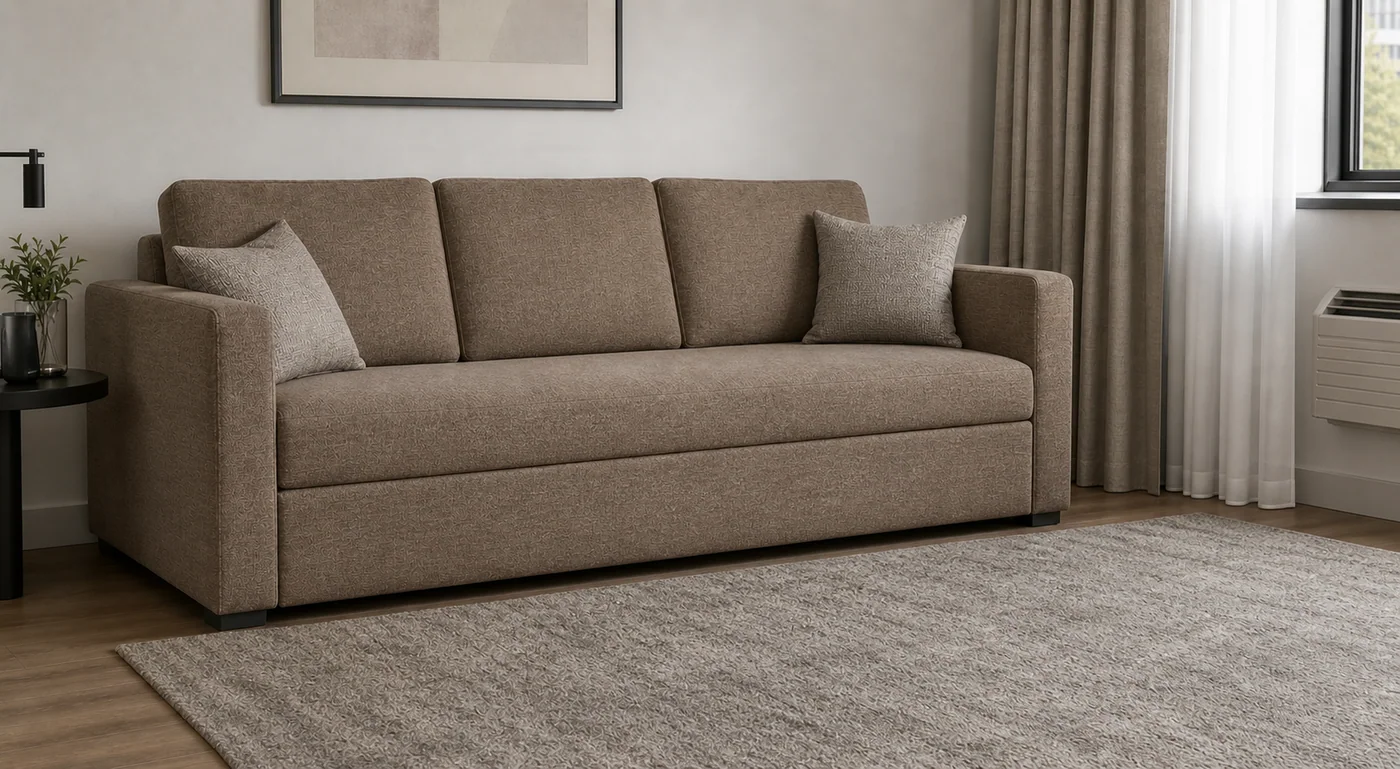
The Most Important Factors for Everyday Comfort
Sleeping-surface support and pressure distribution
The opened surface should transfer the sleeper’s weight to a stable deck, frame and floor-contact points without a local bar, gap or unsupported edge dominating the feel. Test the center, sides, head, hip zone and foot end. Comfort is personal, so record the approved sample and user assumptions instead of making medical or universal comfort claims.
Surface flatness and transitions
Integrated panels, cushion seams and folded mattresses can create height changes. Inspect the surface visually, then lie across each transition in normal sleeping directions. A topper may soften a minor seam, but it also needs storage, laundering and resetting. It should not be used to hide an unstable joint or mismatched panel height.
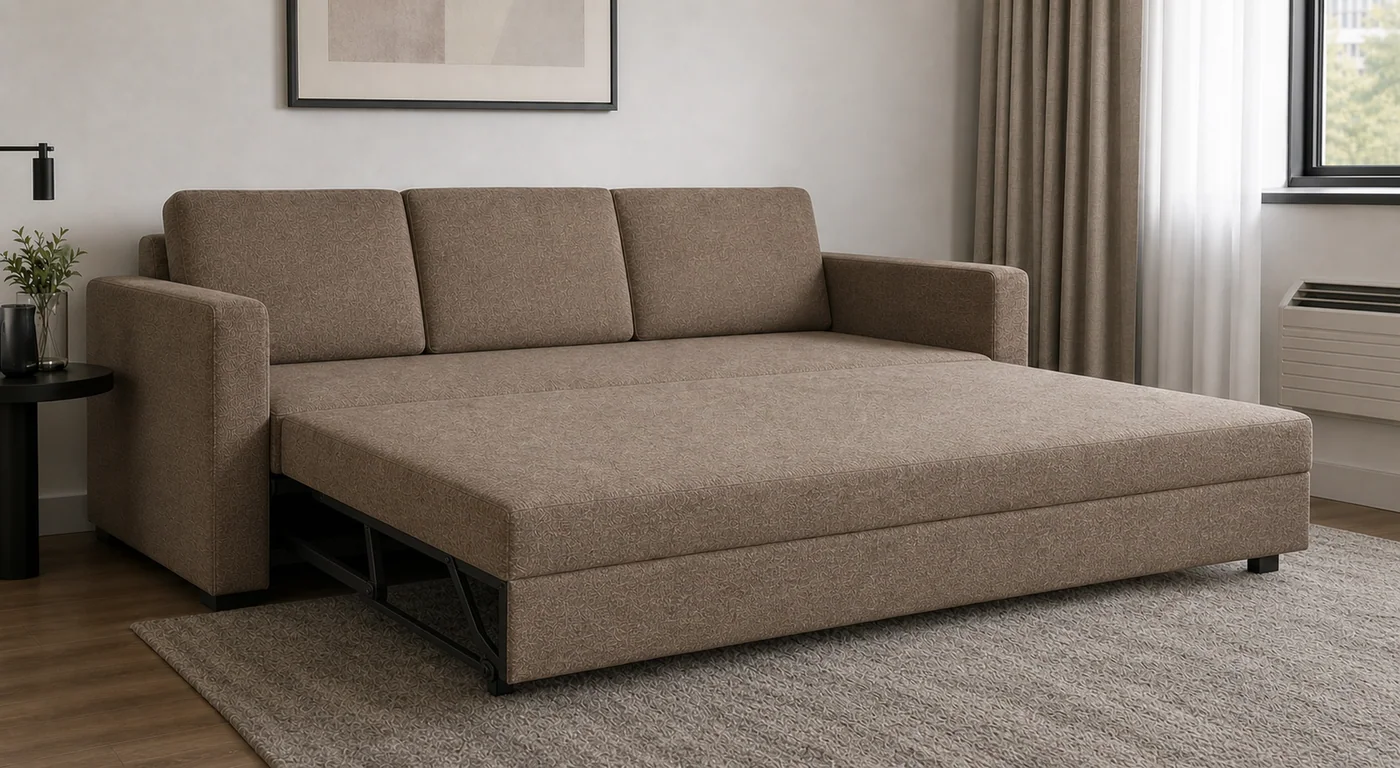
Body-size range, ventilation and heat retention
The usable width and length must suit the intended guest profile, and the supporting structure should distribute weight through its planned load path. Capacity specifications should be confirmed with the manufacturer and supported by the relevant design or test basis. Foam, covers, bedding, room temperature and ventilation all influence heat perception; assess the complete setup under representative conditions.
Ease of opening and closing
A daily-use product should be understandable and manageable for the intended operator. Count the steps, identify where hands grip, note cushions that must be stored and verify that fabric or bedding cannot enter a moving path. Test inside the actual front and rear clearance, not in an empty showroom.
Mattress and Sleeping Surface
Where the sofa bed uses a separate mattress, review the complete construction: core type, comfort layers, cover, edge treatment, thickness, resilience and folding behavior. Foam density is one input, not a universal comfort answer. A high number without the material type, layer thickness and test context does not prove support or durability. A lower or mixed construction may work well when it is correctly designed for the deck and duty.
Check recovery after storage, resistance to visible sagging, edge stability and whether the mattress remains positioned during opening and use. Removable or replaceable options can reduce long-term disruption if the replacement envelope is documented. For a detailed material and compatibility review, use the sofa bed mattress guide; this article keeps the focus on everyday performance.
Frame Construction and Structural Strength
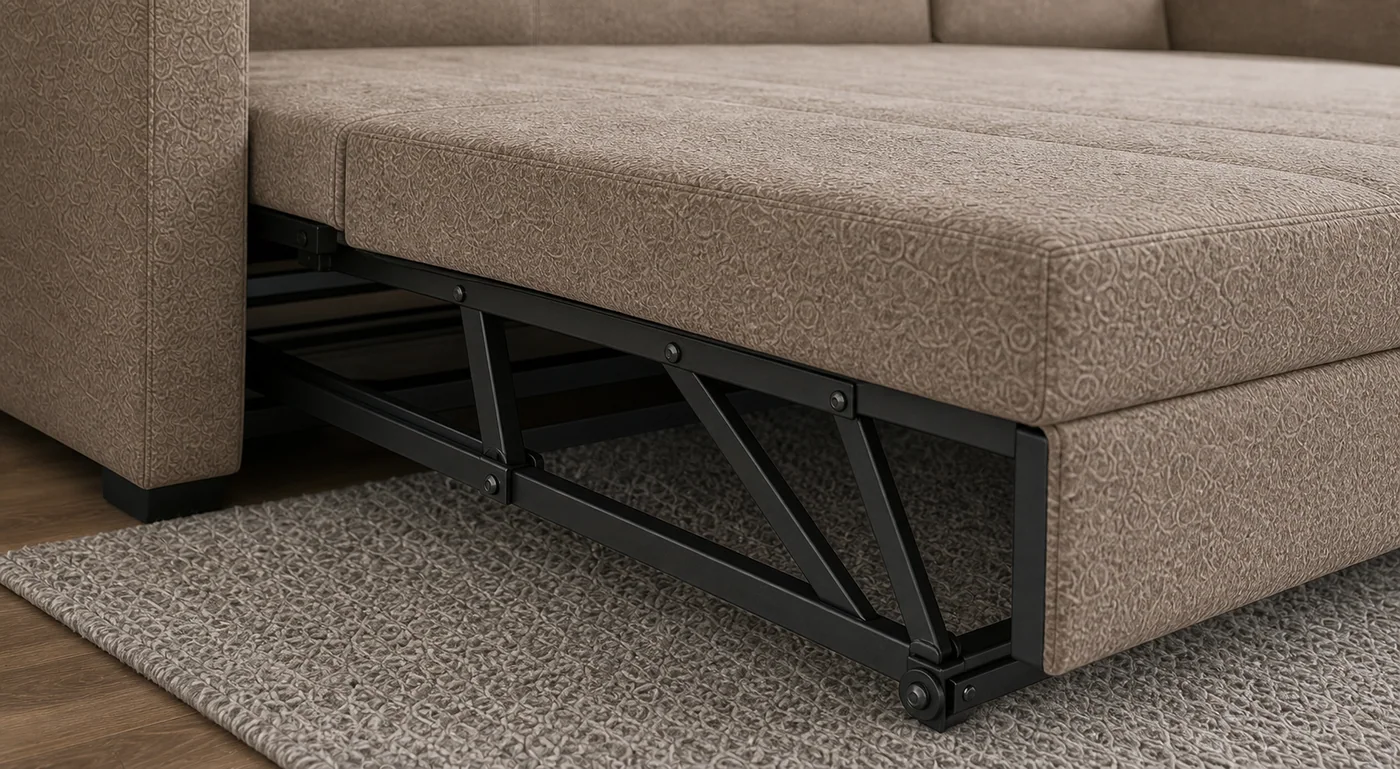
Hardwood, plywood, other engineered wood and metal reinforcement can all play useful roles. The meaningful questions are where each material is used, how joints transfer load, how the opening system attaches and whether the frame stays square in both modes. Look for appropriate corner blocks, secure fasteners, controlled cutouts and reinforcement around moving hardware rather than judging a frame by one material label.
Support bars, legs and decks must align so the opened product lands on stable floor-contact points. Check that a person sitting on an edge does not create unacceptable lift or rocking elsewhere. Inspect the arm, back and front-rail connections as well as the bed structure. The sofa frame and foam guide provides additional construction questions for the seating shell.
Seat Foam and Cushion Durability
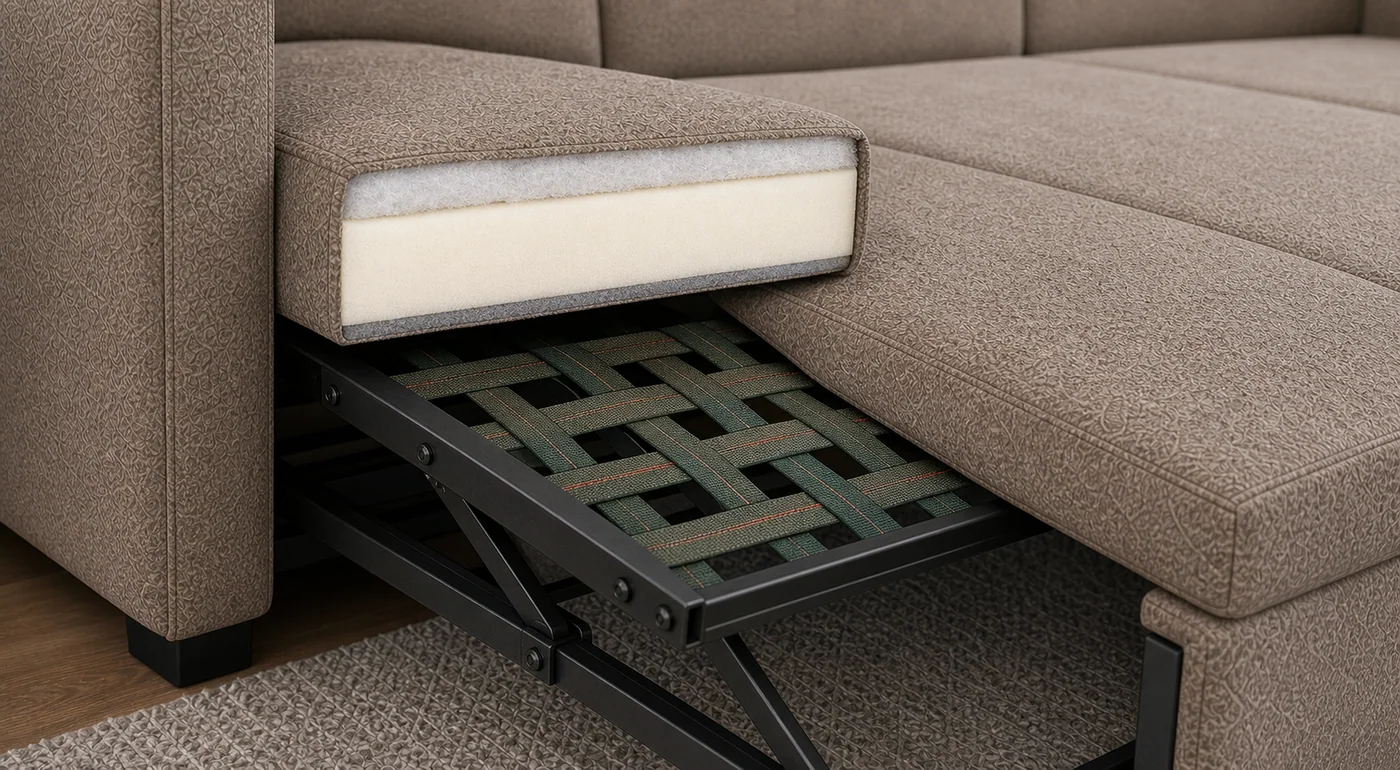
Everyday sitting and sleeping can pull the cushion brief in different directions. Deep, soft lounge cushions may feel inviting when seated but create pronounced slopes or transitions in a flat sleep surface. A firm sleep deck may feel controlled at night but make daytime seating too upright. Buyers should identify the priority and approve the compromise rather than expect one untested foam description to optimize both.
Ask for the core, comfort layers, wrap and support below the cushion. Observe front-edge recovery, seam movement and differences between fixed and moving sections. Review the sample again after realistic sitting and conversion, but do not invent a test-cycle number unless the project or applicable standard defines one. The approved specification should describe the build and acceptance method.
Upholstery for Frequent Use
| Material direction | Appearance and construction | Cleaning and climate consideration | Buyer check |
|---|---|---|---|
| Polyester | Available in many textures; performance depends on the exact yarn and construction | Often practical when the approved fabric supports the required cleaning method | Confirm abrasion, pilling, colorfastness, backing and stain-cleaning procedure |
| Performance fabric | Specified around measurable project requirements rather than fiber name alone | Can support demanding rental or hospitality cleaning briefs | Verify which performance claims apply to the exact color and lot |
| Velvet | Rich visual depth and directional pile | Marks, pile shading and dust visibility vary by construction and color | Review directional cutting, cleaning, climate and replacement matching |
| Linen-look fabric | Textured residential appearance without assuming natural-linen behavior | Cleaning and snag performance vary widely | Approve a full upholstery sample and do not infer properties from the name |
| PU leather | Wipeable surface and consistent appearance when correctly specified | Heat, humidity, hydrolysis resistance and surface wear need project review | Confirm substrate, finish, cleaning agents and destination climate |
| Genuine leather | Natural grain variation and a premium material direction | Requires suitable care and batch expectations | Approve hide grade, color range, maintenance and repair approach |
The generic material category cannot replace an exact fabric approval. Request a labeled cutting, technical information relevant to the project and cleaning guidance for the specified color. If fire-retardant, abrasion or chemical-resistance requirements apply, confirm the destination standard and evidence for the quoted upholstery; local standards may vary. Material options should remain tied to the approved sample and cleaning brief.
Choosing the Correct Size
Measure the closed sofa width, depth and height, then record the full opened length and usable sleeping width. Add the front space required for operation, the side clearance for bedding and the walkway that remains after conversion. Check wall trim, curtains, radiators, sockets, side tables and doors. If the sofa moves during opening, mark both the starting and final positions.
Delivery measurements are separate. Confirm the largest module or packed size, doorway clear width and height, elevator opening and cabin, corridor turns, stairs and final assembly zone. Include a storage location for pillows, linen, toppers and any removed cushions. Use the sofa bed dimensions planning guide to document the room before freezing the order.
Everyday-Use Sofa Bed Checklist
| Checkpoint | Approval question |
|---|---|
| Frame | Materials, joint quality, square alignment and reinforced attachment zones documented |
| Sleeping surface | Flatness, transitions, pressure points, edge behavior and usable size approved |
| Mattress | Exact construction, thickness, recovery and compatibility confirmed where separate |
| Foam | Seat and back build identified; recovery and deformation reviewed on sample |
| Fabric | Exact color, backing, cleaning method and required performance evidence approved |
| Operation | Complete open/close sequence understandable within the actual clearance |
| Noise | No unexplained squeak, rubbing or impact during sitting, turning and conversion |
| Stability | All feet and support points contact the floor; no unacceptable rocking or movement |
| Dimensions | Closed, open, sleep surface, doorway, elevator, wall and walkway measurements confirmed |
| Maintenance | Inspection points, cleaning access and safe moving instructions documented |
| Replacement parts | Serviceable components and replacement mattress or cushion envelopes identified |
| Warranty terms | Project-specific coverage, exclusions and claim process confirmed in writing |
Send the product style or reference image, closed and open dimensions, quantity, fabric or color preference, usage scenario, destination country or port and timeline for an everyday-use specification review.
How Hotels and Apartments Should Test a Sample
Start with a production-intent sample built in the quoted size, materials and upholstery. Open and close it from the normal user position within marked room clearance. Repeat the operation enough to understand consistency, without presenting an arbitrary count as a universal standard. Watch leg deployment, alignment, cushion handling, fabric clearance and the effort required at every step.
Run a sitting test at the center, front edge and sides. In bed mode, lie along both sides and across transitions, then assess the edge and the area above support bars. Listen for squeaks, rubbing and impacts while turning and converting. Confirm that all support points remain stable and that nearby furniture, walls and curtains are protected.
Test the approved fabric cleaning method on a labeled sample, then check color, texture and residue. Reconfirm closed, open, sleep-surface and packaged dimensions. Inspect corner protection, moisture strategy, moving-part restraint, hardware packing and installation instructions. Record photos and signed observations so the production and inspection teams share one controlled sample-approval reference.
Common Buying Mistakes
- Choosing from appearance without testing seated and opened modes
- Ignoring the full open dimensions and remaining circulation
- Using an undefined residential specification for a high-frequency commercial duty
- Treating mattress thickness as the complete comfort answer
- Buying a bulk quantity without evaluating a production-intent sample
- Ignoring cleaning access, replacement parts and routine inspection
- Accepting generic fabric or frame labels without the quoted construction
- Comparing suppliers against different sizes, duties or material assumptions
Recommended Specifications by Application
| Application | Likely duty | Specification emphasis | Approval note |
|---|---|---|---|
| Occasional guest room | Occasional sleeping and normal daytime use | Simple conversion, acceptable support, correct room fit and easy cover care | Confirm the guest profile and avoid over-specifying unused complexity |
| Airbnb or vacation rental | Variable guests and repeated turnover | Intuitive operation, cleanability, robust edges and clear instructions | Include cleaning, damage inspection and linen reset in sample approval |
| Serviced apartment | Frequent sitting with regular or extended sleeping | Balanced seat and sleep support, replaceable wear items and quiet operation | Test repeated conversion and longer-stay bedding routines |
| Hotel suite | Guest-operated or staff-prepared extra bed | Professional closed appearance, controlled opening, housekeeping access and serviceability | Confirm applicable fabric and fire requirements for the destination |
| Studio apartment | Potential nightly conversion | Verified daily-sleep brief, compact closed size, full open clearance and manageable effort | Do not select an occasional residential model only because it fits when closed |
| Staff accommodation | Practical repeated sleeping | Stable support, straightforward cleaning, simple parts and documented inspection | Match the specification to actual use rather than a generic contract label |
These directions are briefing priorities, not fixed technical standards. A luxury hotel suite, value rental and staff room can require very different surface feel, upholstery and operating refinement. Specifications should be confirmed with the manufacturer, and project teams should align applicable destination requirements before ordering. Review commercial sofa bed options only after the duty and room envelope are defined.
Conclusion: Choosing the Best Sofa Bed for Everyday Use
The best sofa bed for everyday use is not one fixed product or mechanism. It is the sofa bed whose sleeping support, frame, cushions, upholstery, dimensions, operation and service plan match the expected frequency, space, budget and guest profile. Define daily sitting, daily conversion and daily sleeping separately; then test the same construction that will be produced.
A well-controlled sample turns vague claims such as comfortable, durable or hotel grade into project-specific observations. Send HUAXUAN the reference style, dimensions, quantity, fabric direction, usage scenario, destination and timeline so the quotation can state its assumptions and the components that remain subject to sample approval.
FAQ
What type of sofa bed is best for everyday use?
The best type is the one whose complete frame, sleeping surface, cushions, dimensions and operating system have been specified for the actual daily duty. No single mechanism is universally best. Compare production-intent samples using the same room, user and frequency brief.
Can you sleep on a sofa bed every night?
A sofa bed may be used every night when the manufacturer confirms the construction for that duty and the buyer approves support, surface continuity, dimensions, ventilation, conversion and maintenance. An occasional-guest model should not be assumed suitable for nightly use.
How thick should a sofa bed mattress be?
There is no universal best thickness. It depends on the mechanism cavity, fold geometry, support deck, mattress construction and target comfort. A thicker mattress may interfere with closing, while a thin one may reveal support points. Confirm the exact build on the proposed sample.
What frame is best for a durable sofa bed?
A durable frame can use appropriate hardwood, engineered wood, plywood and metal reinforcement in a well-resolved structure. Material names alone do not prove strength. Review joint design, mechanism attachments, load paths, support legs, alignment and workmanship.
How can buyers test sofa bed comfort?
Test the complete production-intent sample in sofa and bed modes. Sit at the center and edges, lie across joints and support zones, assess flatness and temperature feel, operate it in the planned clearance, listen for noise and repeat the review after conversion and cleaning trials.
Are commercial sofa beds different from residential sofa beds?
Commercial projects often require a clearer duty statement, repeatable specifications, fabric evidence, service access, packaging controls and replacement planning. A residential product may still be suitable in some projects, but the label does not replace verification against the actual usage and local requirements.
Ask about OEM/ODM sofa bed manufacturing with your reference image, dimensions, target quantity, upholstery preference, daily-use scenario, destination port and project schedule.